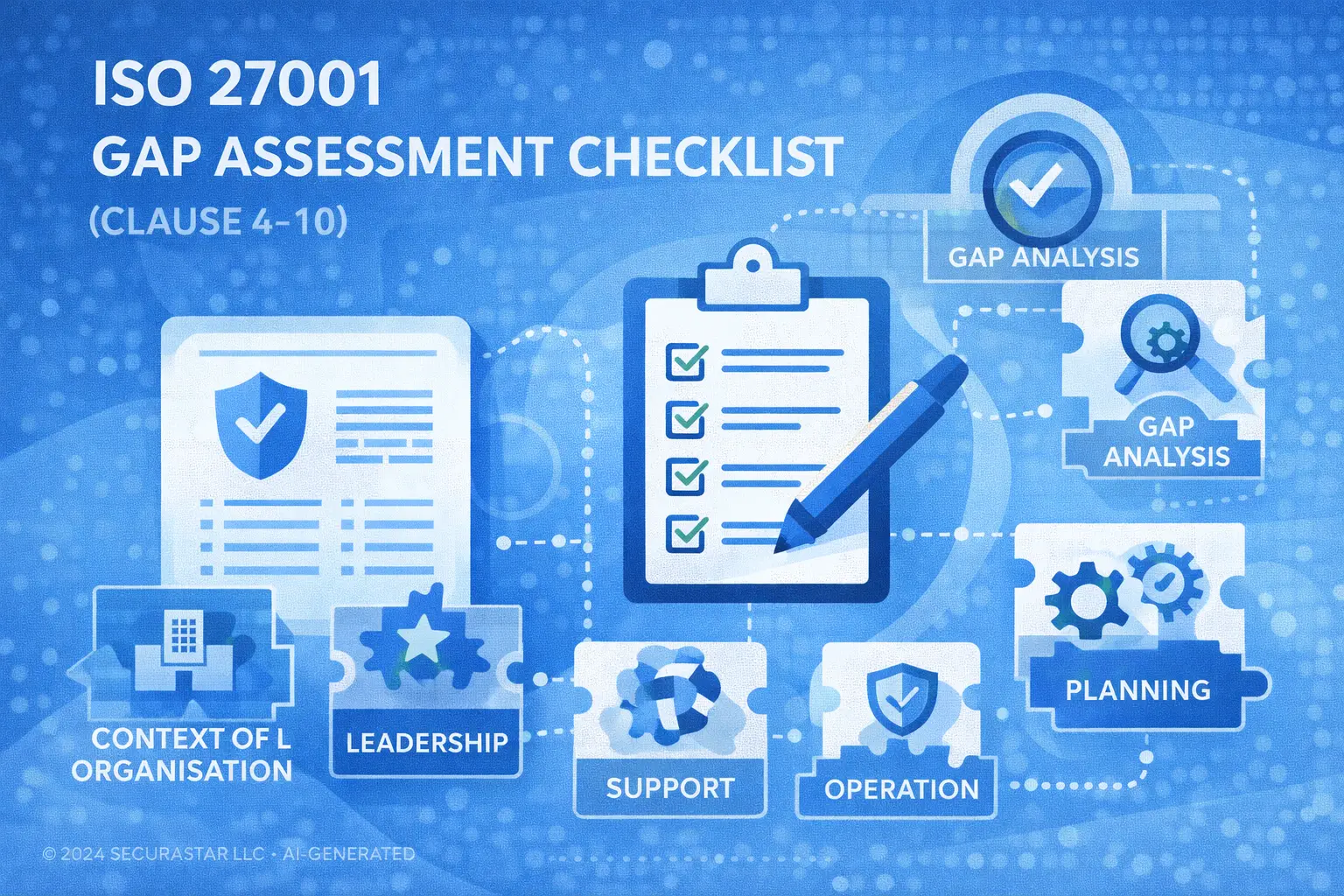
ISO 27001 Gap Assessment Checklist (Clause 4–10)
Preparing for ISO 27001 readiness?
This Clause 4–10 checklist highlights context, leadership, planning, operations, reviews and improvements needed before your audit. Ideal for ISO 27001 Gap Assessments, SOC 2 Gap Assessments.
The ISO 27001 standard is broken down into clauses and security controls (known as Annex A), and every organisation that intends to be ISO 27001 compliant must follow it. Changes are made to the clauses from time to time, which means it’s important to stay updated so that you can adjust your ISMS accordingly.
Our gap assessment checklist will help you identify any flaws in your system so that you can get ready for your audit. ISO 27001 readiness is essential if you want to become certified.
ISO 27001 Gap Assessment Checklist
Below is an overview of Clauses 4–10 and what each requirement means for your ISMS.
Clause 4: Context
“Context” refers to internal and external influences that affect your organisation. These influences cannot be avoided, so you must identify anything—large or small—that could impact your ability to protect information. Understanding context helps you define your ISMS scope correctly.
Clause 5: Leadership
This clause refers to leadership responsibilities. Leaders must ensure implementation tasks are assigned, resources are available, and information security policies are maintained and integrated. Leadership must also demonstrate commitment and make sure the ISMS is fit for purpose.
Clause 6: Planning
This clause focuses on risk assessment. You must establish criteria for identifying, analysing, evaluating and treating information security risks. It is one of the most important clauses, because it defines how you will manage risks across the organisation.
Clause 7: Support
A competent team is essential for compliance. Team members must have the skills needed to develop, implement, maintain and improve the ISMS. If gaps exist, training and awareness programmes should be used to strengthen competence.
Clause 8: Operation
Clause 8 activates Clause 6 by defining the processes needed to execute your risk assessment and treatment plan. You must establish criteria, implement operational controls and maintain documentation. Regular reviews ensure your processes remain effective.
Clause 9: Performance Evaluation
This clause requires monitoring, measurement, analysis and evaluation of your ISMS. Internal audits and management reviews confirm implementation quality, identify non-conformities and highlight areas for improvement.
Clause 10: Improvement
Non-conformities are normal and highlight weak spots that need to be fixed. The goal is continual improvement—removing root causes so that errors and security weaknesses do not repeat. Improvement strengthens your ISMS and reduces future risk.
Request an ISO 27001 Gap Assessment →